
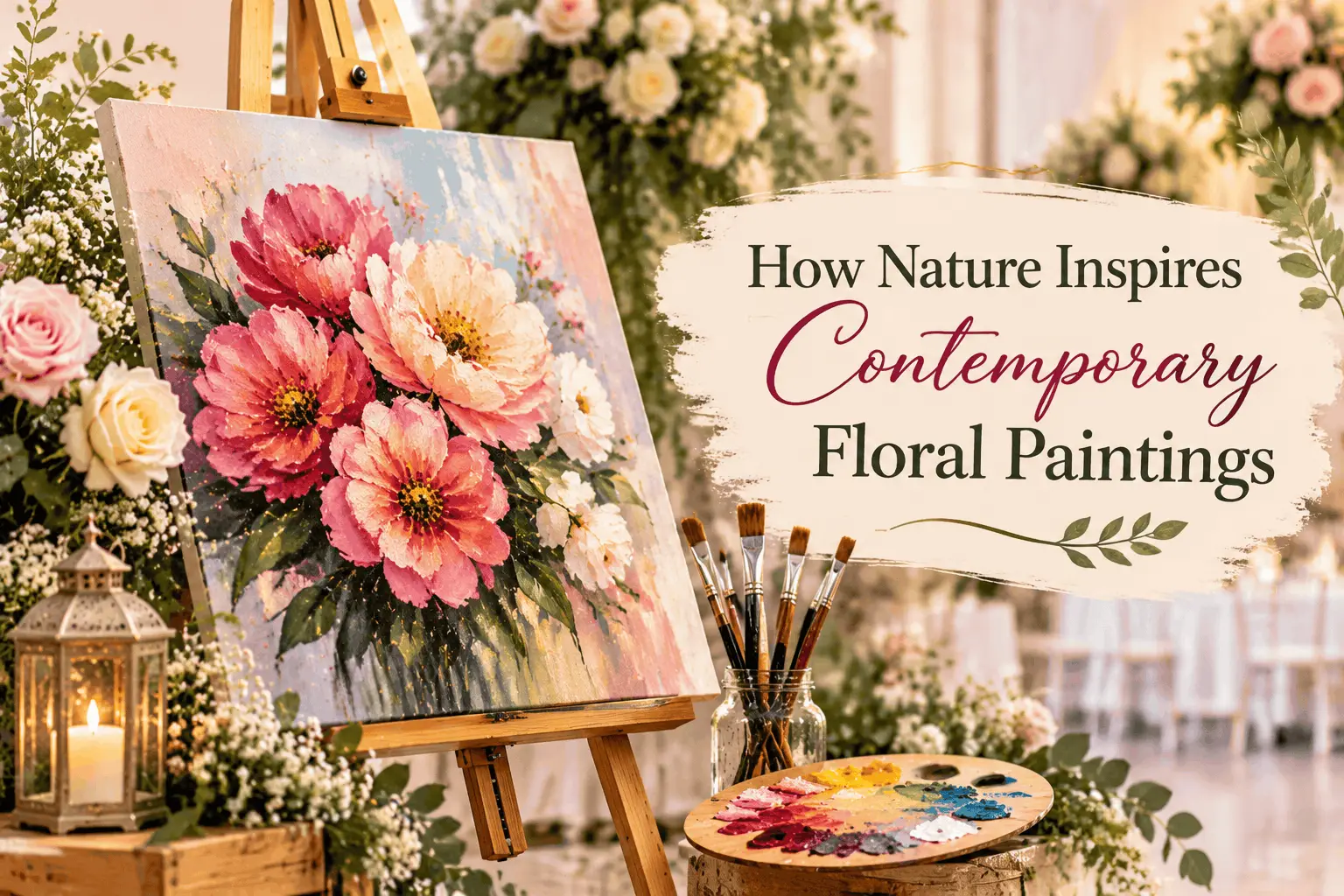
Nature has always been an important source of inspiration for artists. From the delicate structure of a flower petal to the changing colors of a garden throughout the seasons, the natural world offers endless possibilities for artistic expression. Contemporary artists continue to explore these details, finding new ways to interpret familiar subjects through color, texture, form, and composition in their original paintings.
Contemporary floral paintings bring together traditional subject matter and modern artistic perspectives. Rather than simply reproducing the appearance of flowers, artists use them to explore emotion, movement, atmosphere, and the relationship between people and the natural world. Understanding how nature influences these paintings offers a closer look at the creative decisions behind each composition, from the choice of flowers to the colors and techniques used to bring them to life.
Flowers are familiar subjects, but their artistic possibilities extend far beyond their physical appearance. An artist might be drawn to the unusual shape of a wildflower, the layered petals of a rose, or the contrast between bright blossoms and surrounding greenery. These observations can become the starting point for an entirely original composition. Unlike strictly representational artwork, contemporary floral paintings often allow artists to interpret their subjects freely. They may exaggerate certain features, simplify natural forms, or use unexpected color combinations to communicate a particular feeling.
This approach gives flowers a wider artistic role. They can represent growth, renewal, fragility, beauty, or the passing of time. Some paintings emphasize the abundance of a summer garden, while others capture the quiet presence of a single bloom. The result is artwork that draws inspiration from recognizable natural elements while reflecting the individual perspective of the artist.
An interesting floral painting often begins with careful observation. Artists study how flowers grow, how their petals overlap, and how different plants interact within a landscape. These details influence the arrangement of elements on the canvas.
These observations contribute to artistic floral compositions in several ways:
Artists also draw inspiration from flowers beyond traditional garden arrangements. Wildflowers, native plants, and seasonal blooms introduce less predictable shapes and combinations. This variety makes floral artwork inspired by gardens and wildflowers particularly interesting, as no two natural settings offer exactly the same visual experience.
Different floral painting techniques can produce distinct visual effects. Layering is one approach that helps create depth. Artists build up colors and forms gradually, allowing petals, leaves, and background elements to develop a sense of dimension. Blending can produce softer transitions between colors, particularly when depicting delicate petals or subtle changes in natural light. Loose brushwork offers another possibility. Instead of outlining every petal, an artist may use broad, energetic strokes to suggest the movement and abundance of flowers. This technique creates a more expressive interpretation without requiring every natural detail to be clearly defined.
Texture also plays an important role. Varied brushstrokes and paint applications can distinguish smooth petals from textured foliage or create the impression of densely layered blossoms. Some contemporary artists combine several techniques within one painting. They might use precise details in the foreground while keeping the surrounding elements loose and atmospheric. These choices allow the artwork to retain a connection to nature while expressing a distinctive artistic style.
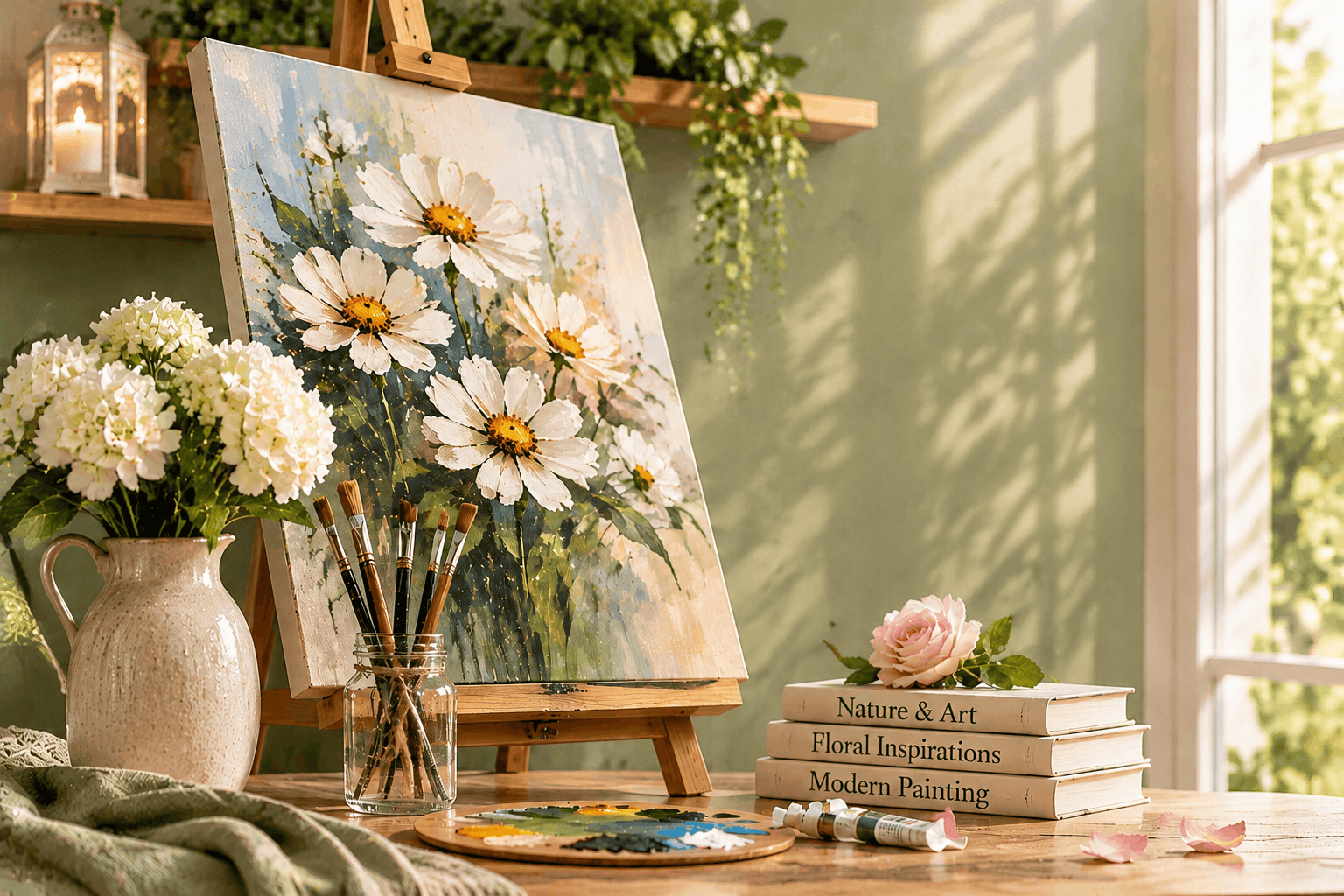
Floral color palettes can influence the mood and visual character of a painting. Soft pastel shades often create a gentle, understated atmosphere, while saturated colors can make a composition feel energetic and expressive. Artists do not always reproduce natural colors exactly. They may intensify a flower’s original shade, introduce contrasting tones, or use colors that are not commonly found together in nature. These creative decisions give a painting its own identity.
Botanical color palettes can also reflect seasonal changes. Spring-inspired compositions might feature fresh greens, delicate pinks, and light yellows. Summer scenes often incorporate stronger reds, oranges, and purples, while autumn-inspired artwork may use earthy browns, golden yellows, and deeper shades of red. The relationship between color and composition matters just as much as the individual shades. Contrasting colors can draw attention to particular flowers, while similar tones create a more harmonious arrangement. Through these decisions, artists capture the atmosphere of the natural world rather than simply documenting its appearance.
The relationship between flowers and nature in art extends across centuries and artistic movements. Flowers have appeared in still-life paintings, decorative artwork, scientific illustrations, and large-scale contemporary compositions. Their popularity comes partly from their visual variety. Different species offer distinct shapes, patterns, and textures, giving artists an extensive range of subjects to explore. Even a single flower can look dramatically different depending on its stage of growth, lighting, and surroundings.
Flowers also carry cultural and personal associations. A particular bloom might remind someone of a childhood garden, a special occasion, or a familiar landscape. Artists can draw on these associations to create work that feels personal while remaining accessible to a wider audience.
Modern interpretations expand these possibilities further. Some artists use flowers to explore environmental themes, celebrate biodiversity, or encourage greater appreciation of the natural world. Others approach botanical subjects primarily through color, form, and visual experimentation. This continuing interest has helped establish nature-inspired floral paintings with vibrant colors as an appealing form of contemporary artistic expression. Such paintings can preserve the visual richness of flowers while offering interpretations that go beyond realistic representation.
Although the terms are sometimes used interchangeably, botanical art and floral painting have different artistic traditions and objectives. Botanical art generally emphasizes the accurate representation of plants. Artists pay close attention to identifiable characteristics, including petal structures, leaves, stems, and other botanical details. Scientific botanical illustrations, for example, are often created to help viewers recognize and study particular plant species. Floral painting allows considerably more artistic freedom. Flowers may be recognizable, but accuracy is not necessarily the primary objective. Artists can experiment with proportions, colors, textures, and arrangements to communicate an idea or feeling.
The distinction can be understood through their approaches:
However, the two disciplines can overlap. An artist may combine botanical accuracy with expressive color and contemporary composition. This intersection between botanical art and floral design creates opportunities for artwork that is both visually engaging and connected to the natural world.
Nature-inspired botanical illustrations offer another way to appreciate the structure and diversity of plants. They can range from detailed studies of individual flowers to more decorative interpretations that combine multiple natural elements. These drawing prints often emphasize the details that make each plant distinctive. The arrangement of petals, the shape of leaves, and the relationship between different parts of a flower can all become important visual features. Contemporary artists sometimes incorporate these elements into more expressive compositions. For example, botanical art featuring colorful flowers and natural elements may combine recognizable botanical forms with imaginative backgrounds, layered textures, and unexpected color relationships.
This approach allows artists to retain the observational qualities of botanical illustration while exploring a more personal visual language. Ultimately, original floral artwork inspired by flowers and nature reflects an artist’s individual relationship with the natural world. Each composition offers a different interpretation of familiar subjects, shaped by personal observation, creative choices, and artistic technique.
Nature offers an endless source of inspiration, and flowers provide artists with an especially rich range of shapes, colors, textures, and meanings to explore. Contemporary floral paintings bring these elements together through individual artistic perspectives, allowing familiar natural subjects to take on new forms. From expressive brushwork and imaginative color choices to detailed botanical observations, each approach reveals something different about the relationship between art and nature. The result is floral paintings capturing the colors and beauty of the natural world, while reflecting the creativity and perspective of the artist.
For those who appreciate original floral compositions and nature-inspired artwork, Anita Bischoff’s Art offers an opportunity to explore this connection through art. Discover her collection and experience how flowers, natural forms, and vibrant colors can inspire distinctive contemporary floral paintings.